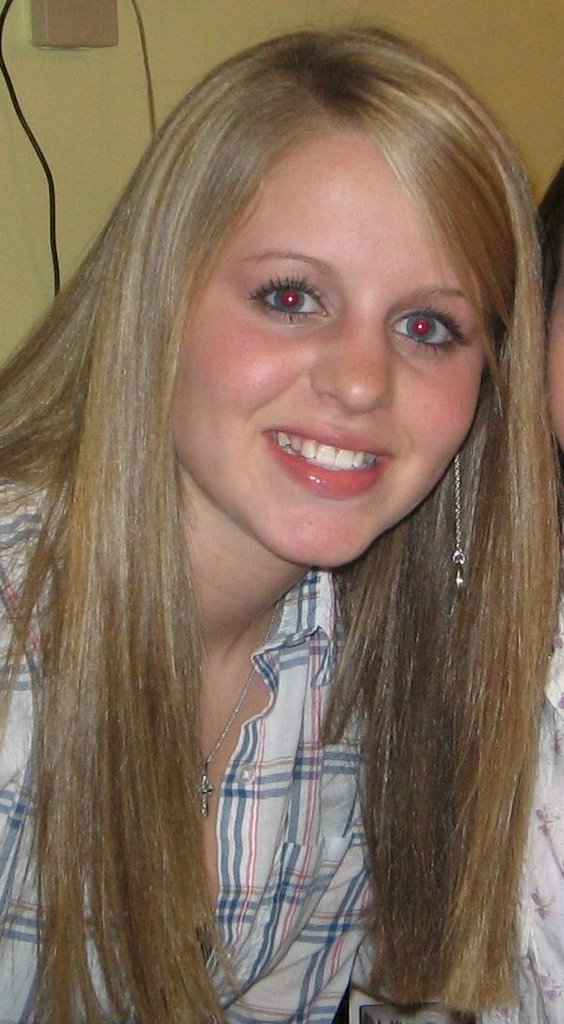
cell phone self-portrait

cell phone self-portrait
things are looking up

Monday, July 02, 2007

"Tammy's in Love"


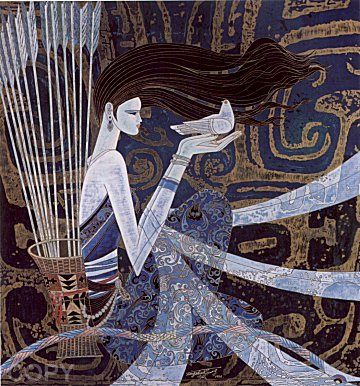
The bird on the top left is a whipporwill, whose song is one of the most unusual that I have heard and one of my favorites. You can learn more about the whipporwill here. Notice that there is a list of songs that feature this nocturnal bird (including one I love, "I Got a Name," by Jim Croce.) I have an orginal copy of this album. Note that "Croce died in a plane crash just days before the album's release."
Here are the words to that song:

Like the pine trees linin the windin road
I've got a name, I've got a name

Like the singin bird and the croakin toad

I've got a name, I've got a name

And I carry it with me like my daddy did

But I'm livin the dream that he kept hid

Movin me down the highway

Rollin me down the highway

Movin ahead so life won't pass me by

Like the north wind whistlin down the sky
I've got a song, I've got a song
Like the whippoorwill and the baby's cry

I've got a song, I've got a song

And I carry it with me and I sing it loud

If it gets me nowhere, I'll go there proud

Movin me down the highway

Rollin me down the highway

Movin ahead so life won't pass me by

And I'm gonna go there free

Like the fool I am and I'll always be

Ive got a dream, Ive got a dream

They can change their minds but they can't change me

Ive got a dream, Ive got a dream

Oh, I know I could share it if you want me to

If you're going my way, I'll go with you

Movin me down the highway

Rollin me down the highway

Movin ahead so life wont pass me by

These words mean a lot to me for several reasons: one, my uncle Leeo and I have been tracking down our ancestors and piecing our genealogy together. He's been doing mostly leg work --- on the road, driving, finding graves, talking to people face to face. I've been doing mostly internet work, tracking down data and names and dates and locations. But what we share is a name; well, several names --- but it all started for us with the Hyatts and Briscoes on my grandmother's side, and the Moons, on my granddaddy's side. We haven't made much progress with the Moons yet, but we'll just about filled in a whole fan chart for the Hyatts and Briscoes. Yesterday, Leeo found his 4th great and my 5th great- grandfather's grave (Green B. Hill, a solder in the War of 1812). He found it because God took him to it, basically --- because it's a miracle that he found it, out in the middle of nowhere with the grass all grown up around it and only one other grave in the old GoldRidge Cemetery in Randolph County, Alabama.

As Croce sang, we're carrying these names with us, like my granddaddy did, and his granddaddy, and so on. But we're "living the dream that he kept hid."

The second reason that I like this song is that it reminds me of a friend of mine from the past,Rob, who loves Croce as much as I do and thinks the world is better for the brief time that he lived and wrote music. We listened to his songs together many times and shared the strange sense of melancholy and pride that it brings. And Rob kind of looked like Croce, smoking his endless cigarettes in his cool, private, and elegant way.

Anyway, back to my original thoughts on the whipporwill, which are leading up to something eventually.
The article also explains that there is a legend associated with the whipporwill.

"In New England, legend says the Whip-poor-will can sense a soul departing, and can capture it as it flees.


The one on the right is a mourning dove. You can learn more about it here:


I wanted a picture of a dove because it is mentioned in the song below. The mourning dove seemed especially appropriate since I am in mourning for my mother. The other birds are also mentioned.
Now, getting around to my main point,I missed Mama this morning, so I went to a website where I could get the lyrics and audio for the song, "Tammy's in Love," which she used to sing to me when I was little. It's from a 50's movie with Debbie Reynolds, Tammy and the Bachelor.

I hear the cottonwoods whisperin' above,
Tammy ... Tammy ... Tammy's in love
The ole hooty-owl hooty-hoos to the dove
Tammy ... Tammy ... Tammy's in love
Does my lover feel
What I feel

When he comes near?
My heart beats so joyfully,You'd think that he could hear
Wish I knew if he knew What I'm dreamin' of
Tammy ... Tammy ... Tammy's in love
Whippoorwill, whippoorwill, you and I know
Tammy ... Tammy ... can't let him go
The breeze from the bayou keeps murmuring low:
Tammy ... Tammy ... you love him so
When the night is warm, Soft and warm,
I long for his charms
I'd sing like a violin If I were in his arms
Wish I knew if he knew
What I'm dreaming of
Tammy ... Tammy ... Tammy's in love

This morning one of my friend's asked me if I would go back and be six years old again if I could. I said I would, if I could have my mother back, singing to me.


Tuesday, June 05, 2007

Book, Pencil, Understanding


"The type of writing a student uses can affect comprehension gains."


(This blog entry is something I'm doing to prepare for a workshop I'm giving on Friday, so if you're not into education strategies, you might skip this one.)

I'd first like to acknowledge the source of much of the material I'm about to examine. The source is not in MLA format.

"Learning the Write Way: The Writing-to-Learn Approach Can Be Used Across Disciplines to Foster Critical Thinking Skills." Deidra M. Gammil, The Reading Teacher 59.8 (May 2006): p 754(9).

The introduction to Gammill's essay invites readers to consider the connection between reading, writing, and understanding --- thus, the three elements I've listed in my title above. You'll notice that my book is open and blank. It might as well be blank if I can't understand what I'm reading or if I can't retain the information it contains. We're going to look at an example section of a great book by Barack Obama, The Audacity of Hope, and do a reading exercise. So if everyone will turn to the section of your workbook called "Obama", let's give it a shot. First, put away all pencils and paper and just read the couple of paragraphs of the material.

What do you remember?

Now, let's try it again. This time, as you read, take notes on a separate piece of paper. Just phrases that stick out or ideas you'd like to remember, or direct quotes.


Put your paper away and tell your neighbor what you remember about the passage now.

Okay, third time around, we're really reading for understanding. When you write this time, use active verbs that describe the passage you've just read. Example, "Here Obama challenges misconceptions about politicians" (by ..., including ...) or "Here Obama reveals personal anxiety about the political climate (with images of ..., when he writes...).


Finally, do you now find it easier to summarize what you've read and to understand it, and possibly communicate it to someone else? Well, that last part is good, but let's first focus on the first two parts.

According to Gammill, "Writing to learn is different than writing to communicate" because writing to communicate means that we focus on conveying, instructing, or swaying --- rather than shaping, ordering, and representing our own experiences.

Let's look at the difference, using an example from Algebra.

"A set is a collection of objects, which are called the elements of the set. The roster method of writing a set encloses a list of the elements in braces.

The set of the last three letters of the alphabet is written (x, y, z).

The set of the positive integers less than 5 is written (1,2,3,4).

How to use the roster method to write the set of integers between 0 and 10.

A= (1,2,3,4,5,6,7,8,9)

A set can be designated by a capital letter. Note that 0 and 10 are not elements of set A."

Now, let's say I want to write about this passage in order to learn. What do I have to do? Shape, order, and represent my understanding of the passage. I'll try it:

This passage teaches me definitions of terms related to writing sets and provides examples of how to write them. So I can see the shape of the passage:

definition>examples>how to. The concepts are presented in this order because the definitions are most important? Or are we moving from least important to most important? Well, there are only a couple of definitions but there are several examples, so maybe I need to focus most of my efforts to understand on the examples. Should I memorize the examples? Is there an activity associated with this passage. If so, I guess I should do it so that I understand very clearly what a set it, what the roster method is, and how to practice at least this method. Eventually, my sets will look more like this one:


--- what I'm getting now are simple examples.

The writing I just did, which was fairly brief, demonstrates Gimmell's point that "the writing process is very similiar to the speaking, thinking, and learning processes," if we let it be. "This type of learning creates a personal transaction through which the student takes ownership of learning and buildings meaning" (1). It's like sending a text message to your own brain.


As Gimmell points out, "the physical act of writing plays a large part in the development of metacognitive skills."

http://www.gse.buffalo.edu/fas/shuell/CEP564/Metacog.htm

"As students become comfortable with writing-to-learn processes, teachers can gently prompt them to produce just a little more, to expand an idea or follow a line of questioning to its logical conclusion." One way to achieve this is through the KWL chart, which represents "what students know, what they want to know, and what they learn."


You have a KWL chart in your workbook. Take a look at it and then let's try it. Looking at page 140 in the textbook, Hole's Essentials of Human Anatomy and Physiology. We can look quickly at the headings (Support and Movement, Facial Skeleton, and Infantile Skull), and then write what we know about these subjects at this point. We may not think we know anything, but let's try it.

I know that joints and bones and muscles and circulation are important in the support and movement of the human body. I also know that these elements are important in shaping the face and in communicating our emotions and ideas. I know that the infant skull is fragile, that is not completely enclosed for several months or even years, and that there is a reason for this, but I don't know what it is. So there is something to go on my want to know chart. Let me take a look at that section and see if I can find the answer. Oh, yeah --- I remember that word now: fontanels (soft spots). And there's my answer. The skull of an infant has to be flexible as it passes through the birth canal. I can move that to the what I've learned section. But there is so much more. How long does it take for the fontanels to close? (want to know) --- why doesn't it tell me? How can I find out? Does it matter in relation to what I'm learning?


"The average time for the anterior fontanel to close is 18 months, but the timing varies widely. As early as 9 to 12 months is considered normal." I found this by quickly searching on Google with the prompt "When do the fontanels close?" I found this website and spotted the answer.

http://health.yahoo.com/topic/parenting/baby/article/drgreene/Parenting_drg_fa_00013955

This is an example of how my writing led me to ask an additional question and get an additional answer ---- in other words, to expand my learning.

"Learning logs can also help students refine their understanding by connecting with prior knowledge and experiences." Let's look at the topic of evolution as an example, drawing from Biology: Concepts and Connections. Using the KWL chart, or just writing a parapraph based on its principles, I am going to freewrite my way through this:

I know little about evolution except for what I've read about Darwin's experiments and theories --- survival of the fittest, etc. I recall something about how birds descended from dinosaurs and people descended from apes (an insult to the apes, according to Mark Twain). I know that certain species have adapted to changing environments, though I don't immediately recall what they were. I read today that human breast milk in the developed West is not as beneficial to infants as the breast milk of "ancient" times was. Is this evolution in reverse? Another important association I have with evolution is the Scopes trial and the movie version. Another is the evolution vs. creation controversy and the attempts to reconcile the two. So what do I want to know? Well, I want to know the answer to the question posed at the top of 15.8 of our textbook, "Is the temp of evolution steady or jumpy?" So let's see how the book goes about answering this question.


In the first paragraph of 15.8, the author suggests that "we might conclude that evolution can occur either in jumpy spurts or at a slower and steadier tempo." It depends on whether the species evolve by polyploidy, or by geographical isolation. Now I can pretty much figure out what that last term means, but I'll need a good definition of polyploidy.

Here's a website I found that offers a reasonable definition:

http://www.don-lindsay-archive.org/creation/polyploidy.html

(I quit writing here on Tuesday, and now it's Wednesday, and I have pretty much forgotten what that website definition for polyploidy was. Let's see, it was something about two chromosomes sticking together, wasn't it? I've got to look at it again, but first let me tell you where my mind is going. (This is part of that "What I Know" question). I'm remembering a baby that I lost in 1995 because of a freak occurrence --- trisomy 21, Downs Syndrome. My husband and I saw a geneticist, Dr. Virginia Proud (great name, huh?) and she told us there was nothing genetically wrong; it was just that sometimes the 21st chromosome is sticky. Is this something like that polyploidy? I've got to take another detour and look up that syndrome.

http://www.ds-health.com/trisomy.htm

I quickly scanned this article, and although my understanding of trisomy is somewhat improved, I still can't tell if this is related to polyploidy. Let me try again.

http://faculty.clintoncc.suny.edu/faculty/Michael.Gregory/files/Bio%20101/Bio%20101%20Lectures/genetics-%20human%20genetics/human.htm

Um, I've scanned that second article twice, and now I don't think the two events are related, but I still don't really understand much. It's at this point that I realize I need to talk to someone who knows more about this --- probably another teacher on campus. I think of calling Mary Pittman. In the meantime, though, it's probably time to get back to my original objectives for studying. I haven't gotten past the first paragraph of section 15.8.

The first term in bold is gradualist model, so I note that and read the rest of paragraph three (I've scanned two) with the idea that the paragraph will focus on that model. When I finish, I recall that the writer referred to Darwin's views and used butterflies as an example of gradual evolution. Changes occurred in the original butterfly species as a result of movement to different local environments and the necessary adaptations that were required to survive. This happened "over long spans of time." (I'm wondering how long.)


http://www.biology-online.org/biology-forum/about809.html

I quickly locate this forum and wonder if it might be useful to me as I study. I need to ask Mary Pittman if she knows about it and what she thinks. I notice that one of the students writes, "My English is not that good, so I hope my questions don't confuse you." It's interesting because it reveals how hard it can be to even ask a question when you feel inferior in some way.

Ah ha. The next paragraph gives me the bottom line: the gradualist model depends on little changes resulting in big changes (microevolution, "changes to allele frequencies in gene pools can lead to the divergence of species.") So I make a little chart to show myself the order of events.

butterflies>move to different location>face different obstacles>develop small changes in alleles>eventually develop into a new species

Is that right --- a new species, or a new variety of species? Do I even really understand what "species" means? Oh, boy. Here we are at the "W" stage again --- what I want to know.

http://www.biochem.northwestern.edu/holmgren/Glossary/Definitions/Def-S/species.html

Well, that doesn't help. I need to ask Mary. (Hopefully this is what a student will be thinking: "I need to ask my instructor --- and could be encouraged to post this question on the CC message board, chat forum, or by e-mail).

Anyway, it appears from further reading of 15.8 that fossil records do not always seem to support the idea of gradual evolution. In fact, "few sequences of fossils have ever been found that represent gradual transitions of species." It is more likely, explains the author, that the periods in which the species went relatively unchanged were much much longer than those in which they changed. Thus, it's time to examine a non-gradualist model: punctuated equilibrium, in terms of the butterfly species we considered earlier. In this case, it appears that the changes in the butterflies happened in spurts rather than gradually over time. These spurts indicate a significant change in the gene pool to butterflies who drift from the parental environment (in a few hundred or a few thousand generations --- " a short period in geological time.")


The next examples of evolution offered by this section of the text are related to landscape and water. (Death Valley region of California and Nevada, wet climate 50,000 years ago>drying trend, 10,000 years ago> resulting 4000 years ago in desert). Lakes,rivers>isolated springs>deep clefts between rocky walls. Some of these springs house different species of pupfish (a desert-pool fish) that don't exist anywhere else in the world but apparently evolved from "a single ancestral species whose range was broken up when the region became arid").


Saratoga Springs, Death Valley --- one of the places that features the pupfish.


(species of Cyprinodon). "Each adapted to its home spring."

All of a sudden, the text jumps back to the question of whether "thousands of years" can be called "abrupt," and refers to the fact that "fossil record suggests that successful species last for a few million years, on average." (This makes me wonder about how long human beings will last.)

Then, in the next paragraph, we find a reasonable argument from the gradualists about why fossil record does not appear to support their model: fossils can only indicate external factors of extinct species, and "Changes in internal anatomy, body functions, and behavior would go undetected." An excellent point, to me. I have this feeling that I just understood something very important about evolution --- that much of it may be internal and therefore may be difficult to detect.

I've spent a good bit of time on these two pages in the biology textbook, but it was worth it because of the strong impressions I've developed. This is writing to learn.

As Kimerly J. Wilcox and Murray S. Jensen (University of Minnesota), authors of "Writing to Learn in Anatomy and Physiology" point out, recognizing the benefits of writing to learn in science may depend more on subjective data rather than objective data. The entire study is available in your workbooks. Basically, the instructors assigned short and long papers intended to help students learn the course material. When both of these instructors used short papers in their classes as learning assignments,nearly 90% of their students reported at the end of the semester that these assignments had been "Helpful," "Very Helpful," or "Extremely Helpful" in learning the material. In fact, only one student found that the papers were not helpful. For the instructor, the short papers revealed student misconceptions and allowed time for clearing these up prior to exams.

See the "Examples of Several Writing Prompts" beginning on the next-to-last page of the article. What do you think of these assignments?

Friday, June 01, 2007

A Little Wisdom Gained


In my office, for a few years now, I've had posted a poem called "What I Want."

After I'm dead, cremate me.
Take what is left over from my body,
put it in a black cotton cinch-bag
with a long strong cord.

Wait until mid to late July,
and at sundown
hang me betwixt the branches of
the Bishop pines north of Caspar.

Take precautions to tie me high up
in the black green of the shadows.
Make the knot tight.
I never liked to fall.

Don't look at me as you drive past.
I want the bag to rot in its own sweet time.
I want the first rip to start froma bird
needing a string for a nest.

I want my ashes to spill out,
ride on the wind with the pollen
from the pine cones.
I want my bones to scramble to earth
so an owl can pick one as a stone
for its belly to grind food.
Then the owl in freedom's flight
I can trust, will say,
"Who."

I love that poem, and I thought it went along with my philosophies about death and funerals and the like --- none of that for me --- I wanted to be cremated. Then, in March of this year, my mother died. She was honored and buried and memorialized in the traditional way. I was surrounded by family --- my mother had thirteen brothers and sisters, and I have dozens of cousins who also have children. They held me close, made me smile, and brought me photographs and memories of my mother when she was young and healthy and happy. I had nearly forgotten those times before Mama got sick and suffered so much and changed so much. Seeing her in the late 70's, with her long red hair blowing in the wind as she sat on a bicycle brought her back to life for me, and the memories have continued to flow back as time goes by. What I learned from all this is that we need to be with family when we are grieving. The shared experiences, shared memories, shared pain, and shared love mean so much and help us to heal. I am deeply thankful to my family for teaching me this lesson. So, when I die, even if my daughter still wants to follow the advice in the poem above, that will be fine with me --- as long as she gathers her loved ones close --- and people who knew me and can help her remember the happy times. It isn't good for us to grieve alone, and even seeing Mama laid out to rest, with her hair done and a little touch of a smile on her pretty face, in her beautiful dress with her sweet hands resting --- it did me good. It helped me to say goodbye again --- a different, more celebratory goodbye than the one we had at the nursing home, when I held her as she took her last breaths. I realize now that there are these different kinds of goodbye, different acknowledgments of the letting go --- and then there are, again, the hellos. Hello, Mama. I see you smiling proudly in the photo on my desk, sitting as you always did with your excellent posture, surrounded by your sisters and brothers and Granny and Papa Moon. You are with me always.

Wednesday, June 28, 2006

My Mother


Yesterday, the nursing home social worker called to tell me that Mom has become agitated and verbally abusive to her roommate, whom she has loved deeply and who has loved her in return. She and Mary have been the best of friends and depended upon each other, so this is a sad development. I'm not certain if the changes in Mom's mental state and behavior are due to the disease itself (Multiple Sclerosis) or the combination of medications she is on, or simply depression, frustration, and anger. She is being moved out of her room with Mary and will have a different roommate. In the meantime, I have begun the process of trying to have her moved closer to me, perhaps to Augusta, Ga --- but have just received a phone call from the first nursing home I contacted, and they have said they cannot manage her because of her behaviors. They suggested two other places that might accept Mom. All of this is, naturally, very painful. I will see Mom this weekend, and maybe I can make a difference in how she is feeling. I appreciate the prayers of anyone who happens to read this blog. I wish my mother the peace of a holy dove lighting upon her.

Monday, June 12, 2006

Genetic Memory


Those valentines are from the 1920's and 30's. They belonged to my maternal grandmother, and seeing the delicate penciled messages on the backs takes me back to a different time --- a time I haven't been to, at least not in this body. but a time from which I have a piece handed down. Now look at my face and the face of my daughter (above left) and mother (above right) --- both of them at about 15 years old, by the way. What has been handed down in our faces? In our mannerisms? In our tendencies toward certain illnesses? In our "natural" talents? Are we the living memories of our ancestors? This is how some theorists explain the uncanny natural talents and skills of savants --- their abilities which appear to come out of nowhere --- remarkable genius in some areas despite the failure to do something as simple as tie their shoes or feed themselves. Somehow these people have carried down their genius in their genetic material --- although other parts of their brains appear to be stymied or blocked. For more on this, take a look at the following link. http://www.wisconsinmedicalsociety.org/savant/genetic_memory.cfm

Somewhere in those features must be little pieces of my ancestors --- on my mother's maternal side, I know their names back to the early 18th century; on her father's side, I know at least some of their names. However, my father was adopted, so I know nothing about my paternal ancestry. Still, I carry in my body and mind their essence. I believe in genetic memory, and so it is possible that I "saw" these old valentines before --- through my grandmother's eyes. She processed the memories of them, and I supposed it makes a considerable difference if she moved the memories into long-term storage. I assume she did, since she kept a scrapbook with the valentines in it for about 50 years. So if scraps of her memories were carried down to me, maybe I simply remembered the valentines rather than seeing them for the first time. Posted by Picasa What a cool concept. This all gives me an idea for a short story. A mother is looking over her daughter's designs for valentines (she's an illustrator) when they begin to look familiar, so she pulls out her own mother's scrapbook and is amazed to find that they are remarkably similar. When she asks, she is dumbfounded to know that her daughter has never seen these valentines, or if she has, it has been years, and she certainly did not study them or memorize their design elements. She begins to explore the concept of genetic memory, attempting to separate that concept from psychic phenomena --- and along the way finds her way back to God and to spirituality: to the love of God, to His valentine to humanity.

Tuesday, June 06, 2006

On Music in Public Places

I've just skimmed two articles that more or less claim music in public places is irritating. If you want to check them out, they are Fran Lebowitz's "The Sound of Music: Enough Already," and Andrew Mueller's "Can't Stop the Muzak. " You'll have to find Lebowitz on your own because my copy is in a textbook, but here's the link to Mueller: http://www.andrewmueller.net/scroll.lasso?ID=178&story=CAN'T%20STOP%20THE%20MUZAK_full_story

So anyway these two articles have got me thinking about whether I enjoy hearing music when I'm out and about, and I'd have to say mostly yes, I do. On the other hand, when I'm feeling down and blue and lovesick I don't want to hear the love songs --- so I probably pop out of a store more quickly than I would have. And when I'm in a music store, it's kind of hard to get the feel of the music I'm considering when I've got rap blasting in my ears. I think those stores in particular would fare far better by playing a mix of styles in fairly rapid success. You know, first 50Cent, then Barry Manilow, then Jack Johnson, then Carly Simon, then Disturbed, then Mick Jagger, then Travis Tritt. You get the picture.

One good point that Lebowitz makes is about other people's clock radios. Personally, I don't like to wake up to a morning show --- well, maybe if it's Rick and Bubba's "The 7 O'Clock Song." Nor do I want to wake up to "My Humps, my humps my humps my humps, my lovely lady lumps" or anything with vocals really. If I'm a guest at your house and you must have your clock radios set to wake me up with music, please make it classical or piano or acoustic guitar only, turned down very low. Now that would be kind of nice.

Music in restaurants? Only if I can talk over the music without yelling. And match the music to the atmosphere, the food, the clientele, the weather --- I mean, if you are going to be a d.j., make it mean something. Mexican restaurants nearly always get it right. It's nearly impossible to leave a Mexican restaurant in a bad mood --- if a spinach burrito with pico de gallo doesn't cheer me right up, the lively music does.

I'm going out to lunch now; we'll see what's playing.

Thursday, May 25, 2006

Nostalgia and Memorabilia

"Till We Meet Again": http://www.firstworldwar.com/audio/tillwemeetagain.htm

"God Be With You Till We Meet Again"

(These are two different songs, but I wanted to include the link for the first one, which is from 1918 and is lovely). The one Papa Moon refers to in his letter is this one:

"God be with you till we meet again;
By His counsels guide, uphold you,
With His sheep securely fold you;
God be with you till we meet again.

Till we meet, till we meet,
till we meet at Jesus' feet;
Till we meet, till we meet,
God be with you till we meet again." (Jeremiah Rankin, 1880)


Today, I'm browsing through postcards, photos, etc. of my own and of my grandparents and parents. They include: a letter from the U.S. Government to Oscar Moon, date?; poem from Oscar Moon (my grandfather) to my grandmother, 1935; letters from my grandmother (Dollie Jeanette Moon) to my grandfather and vice-versa, in 1935 (before they were married) and 1945, when he was Private Oscar F. Moon; a letter from Nathaniel Moon, my great-grandfather, to his son, 1945; a letter from Dollie and two of her children (Larry and Mary) to Oscar, 1945; a letter from another of her children, Dexter, to Dollie and Oscar, 1961; a letter from my great-grandmother, Mary Lou Hyatt (Dollie's mother), to Dollie; letters from my grandmother's friends, Gladys and Mildred, 1935; and a letter from my mother (Sylvia) to Dollie and Oscar, 1970. There are a few business transaction papers also dated in the 1930's and 40's.

In the letter featured here, Papa Moon is writing by the light of the moon, lying on his bunk at Camp Blanding, 1945. I thought it would be nice to include a photo of the moon as it might have looked to him that night, and also a selection from the book, Goodnight Moon (it's the page that says, "Papa, please get me the moon.")

Tuesday, April 18, 2006

The River is Famous


I love this poem by Naomi Shihab Nye:

The river is famous to the fish.

The loud voice is famous to the silence,
which knew it would inherit the earth
before anybody said so.

The cat sleeping on the fence is famous to the birds
watching him from the birdhouse.

The tear is famous, briefly, to the cheek.

The idea you carry close to your bosom
is famous to your bosom.

The boot is famous to the earth,
more famous than the dress shoe,
which is famous only to floors.

The bent photograph is famous to the one who carries it,
and not at all famous to the one who is pictured.

I want to be famous to shuffling men,
who smile while crossing streets,
sticky children in grocery lines,
famous as the one who smiled back.

I want to be famous in the way a pulley is famous,
or a buttonhole, not because it did anything spectacular,
but because it never forgot what it did.

Tuesday, April 11, 2006

Sighing


I've been sighing a lot today --- I think it's just a little Spring fever, a little restlessness, a little too much Mexican food at lunch.
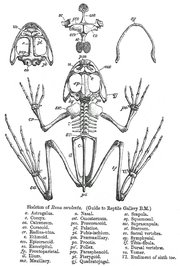
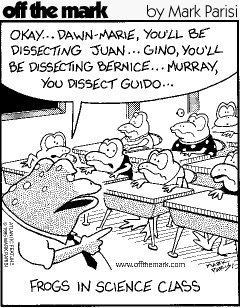
That little frog to my left: he looks like Spring, I thought. So today's theme is frogs. I don't know why. Check out the cartoon. Hee hee. Whew; that brings back memories of slimy afternoons in biology lab and the smell of formaldehyde and trying to figure out what all those frog innards were. I've provided a frog skeletal view for anyone who is interested.

And now a conservationist poem from a Mississippi writer, Luke Wallin (sorry I couldn't keep the poem's original structure):

A Few Words From the Frog Highway

If I could leave you just two words, then you would know your simian soul the way I know my older one, reptilian-fine, sensitivo-so.These are the last hot days of Earth, with all life bathed in the light of death, with your skin foul, so thick and dry, yielding up To the dermo knife, to the laser gun. My tribe lives in the deep green shade, in moisture breath of ground and leaves, our delicate membranes pass the word --from swamp to heart, from breeze to mind; We knew the ancient balance well, from the bedrock’s cold to the sun’s red fire. We know when to Leap a toad, or float so still in the lily lake, its yellow flowers drinking moon, the air abuzz with gifts for lightning tongues. We see air conditioned walls, your speeding cars, your bodies wrapped. We understand that the time grows shortand the water’s gas, and the land is paved--We know how much shade is lost.But I’m not here to bring you down, my mission calls forjust two words, two lovely words with a vision thing, and it’scheap and easy, you’ll admit, make it part of yourPolitics, all that reverb lipsinc feedback. Here’s the deal, if you like our songs, ourSunglasses, our bug control. If you want to see uson the scene, here’s the way you want to go:Just cover Earth with wide green trails,Shady and wet in a Worldwide Web. Tie the net together in a round round map, Outfit the planet for Slideby travel.Think you’ve got it? You greedy-eyed mammals. Reachyour reptile’s underbrain, down in your Heartshade, down in your music. Inside you lives an old old bullfrog, a billion years of Memories and a feeling for the stars. It wouldn’t cost you very much, each could add a little,Frogways up the countryside from pond to shining pond. Two words, Apefolk, try to remember. Focus all your body heat onFrog Highway.

Monday, April 10, 2006

Dreaming I'm a Butterfly


"Am I a man dreaming I am a butterfly, or a butterfly dreaming that I am a man?"
Lao-Tzu, Chinese Philosopher

Today I'm thinking about dreams for more than one reason. First of all, I dreamed last night that I ate a bird --- a small bird, live. I began to spit out blood and feathers, and finally a small beak. It was quite disturbing. I wonder what it means.

Secondly, I'm thinking about how to make dreams come true. Some people say its all about visualization. You make it happen in your mind first, and then the reality will follow. So for the next hour, I'm going to visualize something positive happening today, and see how it turns out: for instance, I'm thinking: today I won't bite my nails or my cuticles, I'll feel confident and capable, I'll finish my faculty performance management document, and my visit with P. will go extremely well. Is that too much to visualize at once, though? And would these actually qualify as dreams? Let's consult the dictionary.

dream: 1) a series of thoughts, images, or emotions occurring during sleep 2) an experience of waking life having the characteristics of a dream 3) a visionary creation of the imagination: daydream 4) a state of mind marked by abstraction or release from reality: reverie 5) an object seen in a dreamlike state: vision 6) something notable for its beauty, excellence, or enjoyable quality 7) a strongly desired goal or purpose 8) something that fully satisfies a wish: ideal 9) to appear tranquil 10) to consider as a possibility: imagine 11) to pass time in inaction 12) to consider possible or fitting.

Well, my goodness --- with that many definitions, I suppose my list fits in there somewhere. Going back to my dream about eating a bird, I am wondering if it has to do with the fact that one of my cats is missing, and by now she hasn't had any cat food (at least any of my cat food) for several days, so I imagine if she's lost she's eating birds. Which makes me feel bad. I miss her and want her to come back. So I'm going to envision her coming back, being at home when I get there today.

Do cats eat butterflies? That would lend a whole new interpretation to Lao's concern and my own. :>)
Wednesday, April 05, 2006

My Latest Poem, a Sestina


For those who are interested, a sestina is "a poem with six stanzas of six lines each and a concluding stanza of three lines. The last word of each line in the first stanza appears as the last word of a line in each of the next five stanzas but in a different order. In the final (three-line) stanza, each line ends with one of these six words, and each line includes in the middle of the line one of the other three words." This is my first effort, so what I have produced is probably just a version of a sestina, not completely true to form --- but it was fun. I encourage anyone who reads this to try writing one. The cool thing is that you discover you have more connections to the chosen words than you might think, and that images and ideas begin to emerge once you focus on the words. I was surprised by what came out of my subconscious as I fashioned this poem, and what I learned about myself.

Sestina from the new Garden of Eden

Today I have set my feet upon a rock
Where things are solid and I can see the sun glisten
And I ask, if I was taken from Adam’s rib
What, then, is the proper food for my soul to eat,
Considering I am carved like wood
Into this womanhood, and I want to run

Like a long-distance runner in a marathon, I want to run
Until my body becomes my own, strong as a rock,
No danger from emotional termites eating into my body’s wood
Until I shine, until I glisten
Until they offer me food and I don’t want to eat
Until I say to Adam I want to be formed from my own rib

Or from the rib of a higher being, not from a man’s rib
As if I emerged from masculinity, as if from that comes my energy to run
Or my impulses, drives, compulsions, hungers, choices about what to eat
Are based on something other than my own deepest needs, my own inner rock
Which is becoming jewelized, a petrified forest log that will glisten
And carry its memories of a former time when it was less glorious wood

When it was primeval, raw, with few rings and it echoed, hollow wood
And its center was all scent and fiber and texture and fastened to the earth like a rib
And there was no light there in its middle earth, no place where the light would glisten
And animals played around it, climbed it, tunneled into it, a safe place to run
There was nothing human for miles, no conversation, no mental rock
No desire, no eruptions, no precipitation, no plans for meals to eat

Before my soul grew and stretched and changed my desire to eat
Before my heart grew stubborn like wood
Before night fell and sun rose and water came from the rock
And the spine of my being needed no rib
Because it was weightless and could slide or fly or run
And angels carried it, carried me, and my soul heart spine began to glisten

Oh and it was glorious, this being-in-nothingness, this one to glisten
This one with an appetite for meaning, for words to eat
For miles to travel, for people to touch, for distance to run
For lakes to ride across, effortlessly, like a hollow wood
For sounds to break free from my spirit’s throat like whistling through a broken rib
Like Sisyphus pushing to the top, without the unbearable struggle, the rock

And I became free to fully understand, to breathe, to run,
Glisten like a rock, seat myself in a ceremonial position to eat
at the wood altar, upon which lies Adam’s rib.

Tuesday, April 04, 2006

Unicorns, Fire Escapes, and Candles


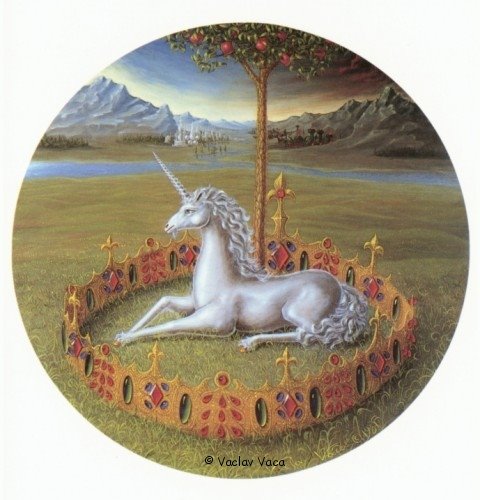
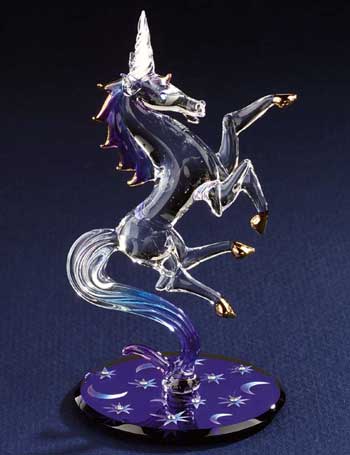
I'm planning to teach my favorite play, The Glass Menagerie, this week, and so I am re-thinking the symbols featured in the play: the unicorn, for instance. That magical, ethereal, remote beast we would all like to discover wandering around in our backyards. Its coiled horn, which is called an "alicorn," contains a remedy for poison. Its tears are supposed to heal a broken heart. I think of Kenny Loggins' version of "The Last Unicorn" and the song's haunting lyrics:

THE LAST UNICORN

When the last eagle flies Over the last crumbling mountain And the last lion roars At the last dusty fountain In the shadow of the forest Though she may be old and worn They will stare unbelieving At the Last Unicorn When the first breath of winter Throughout the flowers is icing And you look to the north And a pale moon is rising And it seems like all is dying And would leave the world to mourn In the distance hear her laughter It's the Last Unicorn I'm alive... I'm alive When the last moon is cast Over the last star of morning And the future is past Without even a last desparate warning Then look into the sky where through The clouds a path is formed Look and see her how she sparkles It's the Last Unicorn I'm alive... I'm alive.

The song seems relevant when I think about the character of Laura Wingfield, who collects little glass figurines, her favorite of which is a unicorn, and who lives largely in a world of her own. She is like the unicorn, also, because she has a distinguising characteristic --- a limp that she feels separates her from the other girls and classifies her as a "cripple." At the same time, Laura is ethereal and lovely and full of grace --- and mysterious, like the unicorn. Once the horn on her glass unicorn is broken, however, he becomes like all the other horses, and the magic is broken. Laura's heart will not be healed. Since I'm not very likely to come across a unicorn today who will let me hop on her back and take me away from my heartache and troubles, a second metaphor to examine is the fire escape, which serves as a porch for the Wingfield family in The Glass Menagerie. One of my favorite scenes from the 1987 film version features Tom (John Malkovitch) and Amanda (Joanne Woodard) on the fire escape. Malkovitch is so sexy in this scene. When he first steps out on the fire escape, he says to the audience,

"Across the alley from us was the Paradise Dance Hall. On evenings in spring the windows and doors were open and the music came outdoors. Sometimes the lights were turned out except for a large glass sphere that hung from the ceiling. It would turn slowly about and filter the dusk with delicate rainbow colors. Then the orchestra played a waltz or a tango, something that had a slow and sensuous rhythm. Couples would come outside, to the relative privacy of the alley. You could see them kissing behind ashpits and telephone poles. This was the compensation for lives that passed like mine, without any change or adventure."

I can't say that mine has been a life without change or adventure. I've had plenty of both. I also can't say, however, that these bring happiness. Still, it's a romantic idea --- a fire escape. I'd like to have a mental fire escape. Perhaps I do: meditation.

Finally, there is the symbol of the candle in the Glass Menagerie. That painful scene in which Tom tells Laura to blow her candles out --- in other worlds, to live in the real, vivid world, which is the only world we have --- to abandon illusion. But also he seems to say please blow out your candles so that I cannot see you and keep searching for you everywhere:

"I pass the lighted window of a shop where perfume is sold. The window is filled with pieces of colored glass, tiny transparent bottles in delicate colors, like bits of a shattered rainbow. Then all at once my sister touches my shoulder. I turn around and look into her eyes ... Oh, Laura, Laura, I tried to leave you behind me, but I am more faithful than I meant to be! I reach for a cigarette, I cross the street, I run into the movies or a bar, I buy a drink, I speak to the nearest stranger ---anything that can blow your candles out! --- for nowadays the world is lit by lightning! blow out your candles, Laura --- and so, goodbye ..."

I love candles. They do give the room an illusory glow --- and scented ones of course add ambience of a different kind. They can invite romance or stillness of the spirit. They can indicate a memorial or a prayer offering or a sort of mini-lighthouse.

Each of these symbols is complex and offers intellectual study and emotional impact. I'll be lingering over them today.

Wednesday, December 14, 2005

Wednesday, December 14

Yesterday I turned 40 --- wow. Okay, so moving on ... :>)

Today I've: taken my car for a brake job, which is my Christmas gift from my fellow; worked with our VISTA, Cathleen, to set up her reflective "blog" here on Blogger.com. We have a Christmas luncheon at 12:30, and then after finishing the day, we are officially on vacation until Jan. 2!! Unreal. Can't wait to ... what? I'll probably work on my mother's transition from a nursing home in Georgia to one close by me, and I'll probably work on BeautiControl sales.

Friday, December 09, 2005

Friday, December 9

Well, there it is. My motto for the coming year, from Ghandhi. I'll claim it early, for my birthday (December 13), which is a pretty significant one: the big 40. Today, the new VISTA (Volunteer in Service to America) and I are going to visit the local Red Cross and invite them to be included in our first annual Martin Luther King, Jr. Day of Service (January 16). It's 9:37 a.m., and we have to be there at 10 a.m., so this will be a short first blog. We're off to change the world!

The Change I Want to See in the World

Thursday, September 08, 2005

The Long, Angry Wait for Help

The Long, Angry Wait for Help: "
In Jackson, Miss., confusion, politics, and a crush of evacuees and local townsfolk stir emotions at an aid site
"